
If you, or someone you know is in immediate danger, please call 000, visit your nearest hospital emergency or contact any of the crisis support services.
Research shows people are more likely to ask for support if they hear others from their culture or with a similar background talking about suicide and mental health concerns. This can be about everyday problems or more serious challenges.
The collection of resources is designed to help community broadcasters talk about mental health, mental health concerns or suicide in ways that promote suicide prevention, and encourage help-seeking and help-offering in their communities.
Everymind will continue to update and expand these resources as we work closely with the broadcasting community. Translated materials along with audio and video content are currently in development. In addition, broadcasters will have access to training, as well as real-time Mindframe support and advice to assist with planning and delivering broadcasts that address mental health concerns and suicide safely and responsibly.

Introduction to this resource collection
This resource explains how the rest of the resources in this collection can be used.
It also includes quick tips on important things to consider before, during and after your broadcast, as well as some initial points that you may like to consider in your approach to addressing these topics.
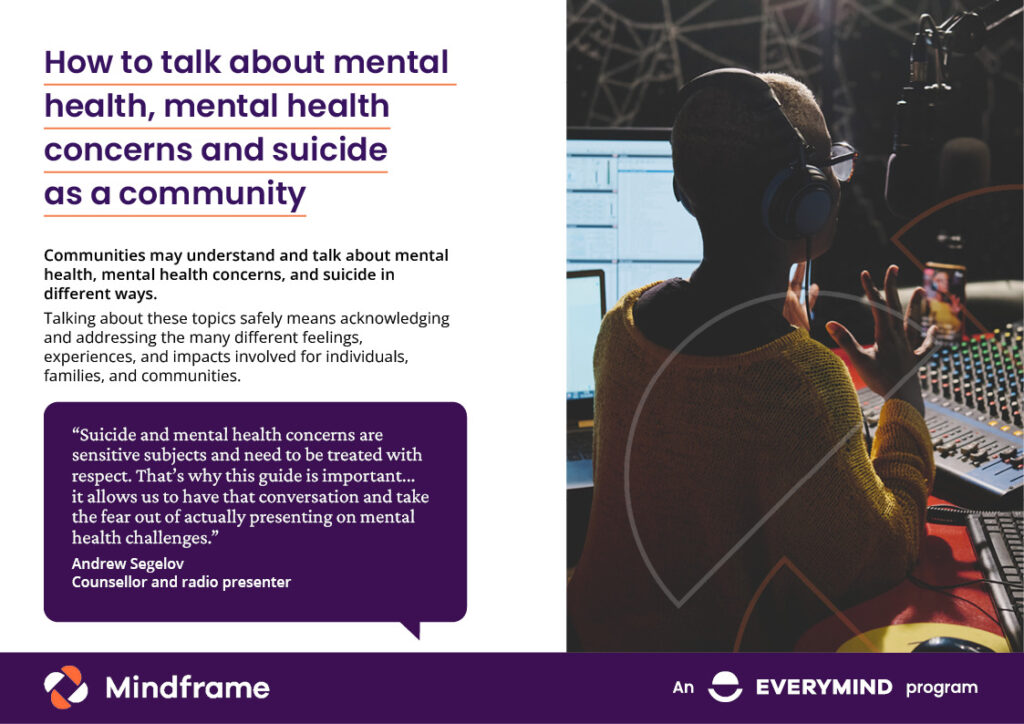
Communities may understand and talk about mental health, mental health concerns, and suicide in different ways.
Talking about these topics safely means acknowledging and addressing the many different feelings, experiences, and impacts involved for individuals, families, and communities.
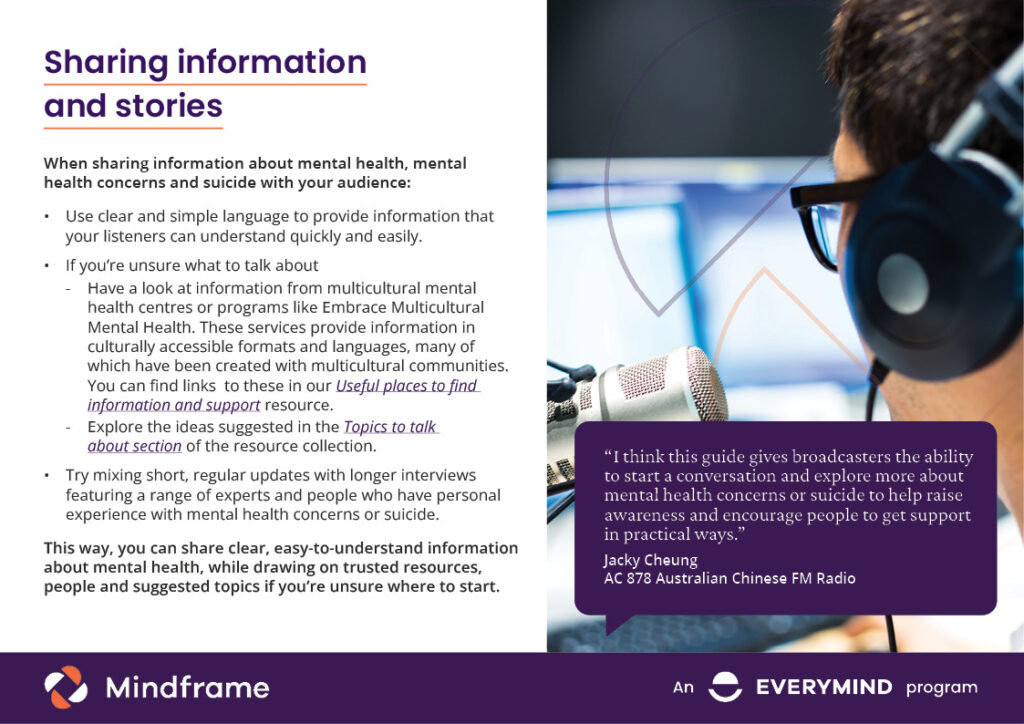
When sharing information about mental health, mental health concerns and suicide with your audience use clear and simple language to provide information that your listeners can understand quickly and easily.
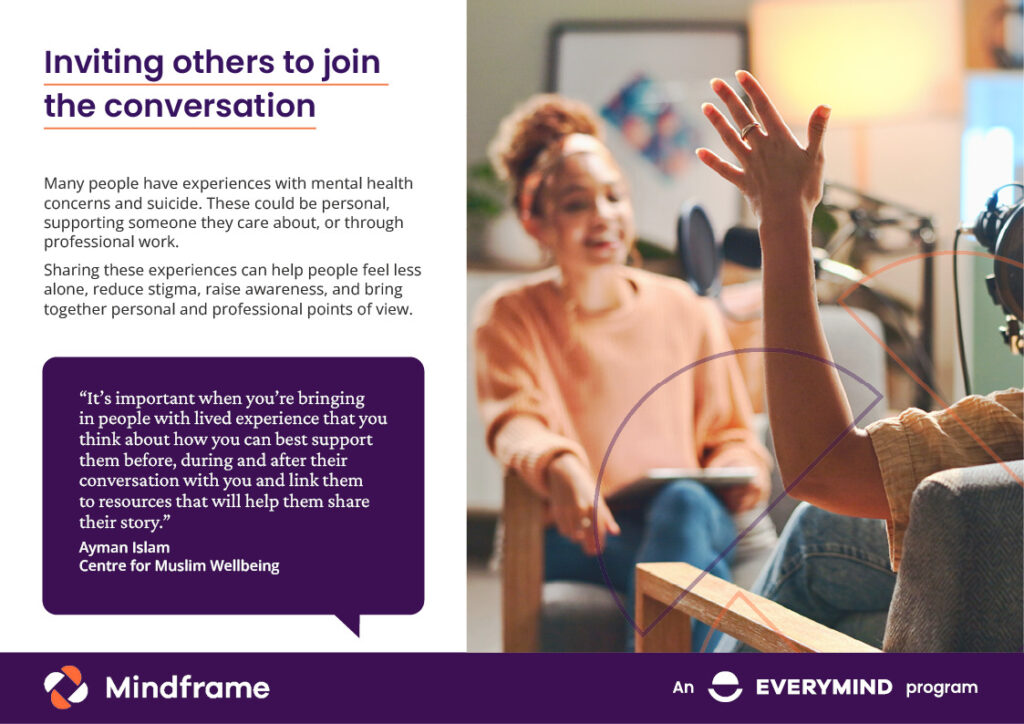
Many people have experiences with mental health concerns and suicide. These could be personal, supporting someone they care about, or through professional work.
Sharing these experiences can help people feel less alone, reduce stigma, raise awareness, and bring together personal and professional points of view.
Topics to talk about
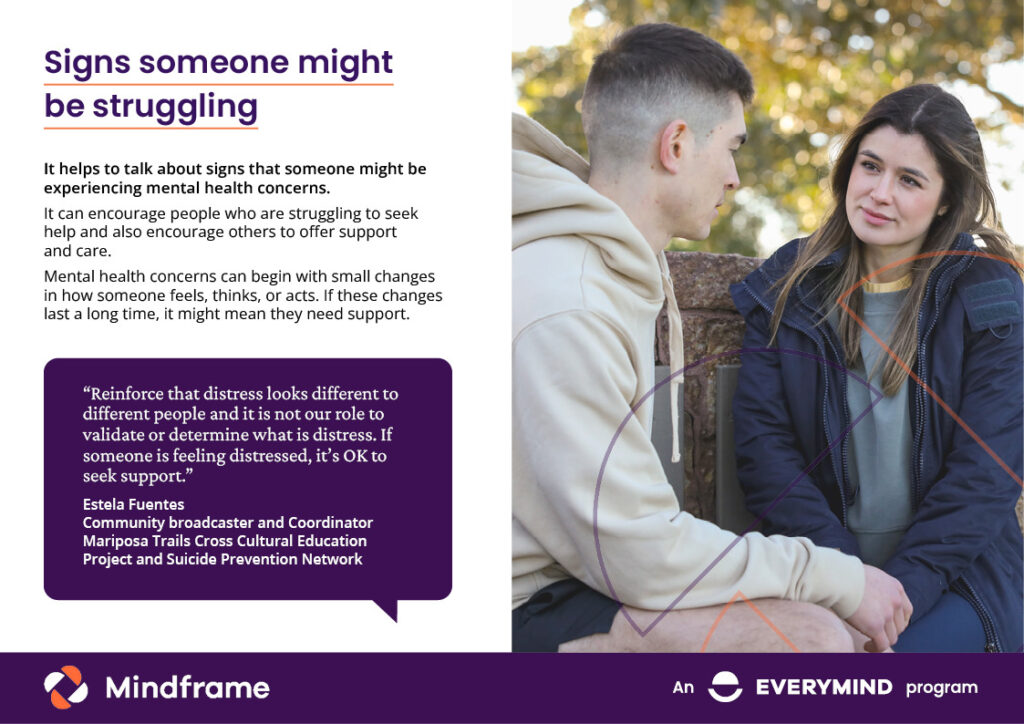
It helps to talk about signs that someone might be experiencing mental health concerns.
It can encourage people who are struggling to seek help and also encourage others to offer support and care.
It’s important to remember that things that protect people’s mental health or put them at risk of experiencing a mental health concern can be very different for each person and community.
When you talk about this in your broadcast, try to include a variety of examples.
Faith and religion play an important role in the lives of many Australians, and can shape how people make sense of suicide and mental health concerns.
For some, their beliefs provide comfort, strength, and a sense of connection. For others, certain teachings or expectations can make these topics harder to talk about or seek help for.
Stigma is the negative beliefs or attitudes about a person, or a group of people, based on a single factor, like an experience with suicide or a mental health challenge.
Some cultures may view suicide and mental health concerns more negatively than others. The reasons for this can be complicated and influenced by many things.
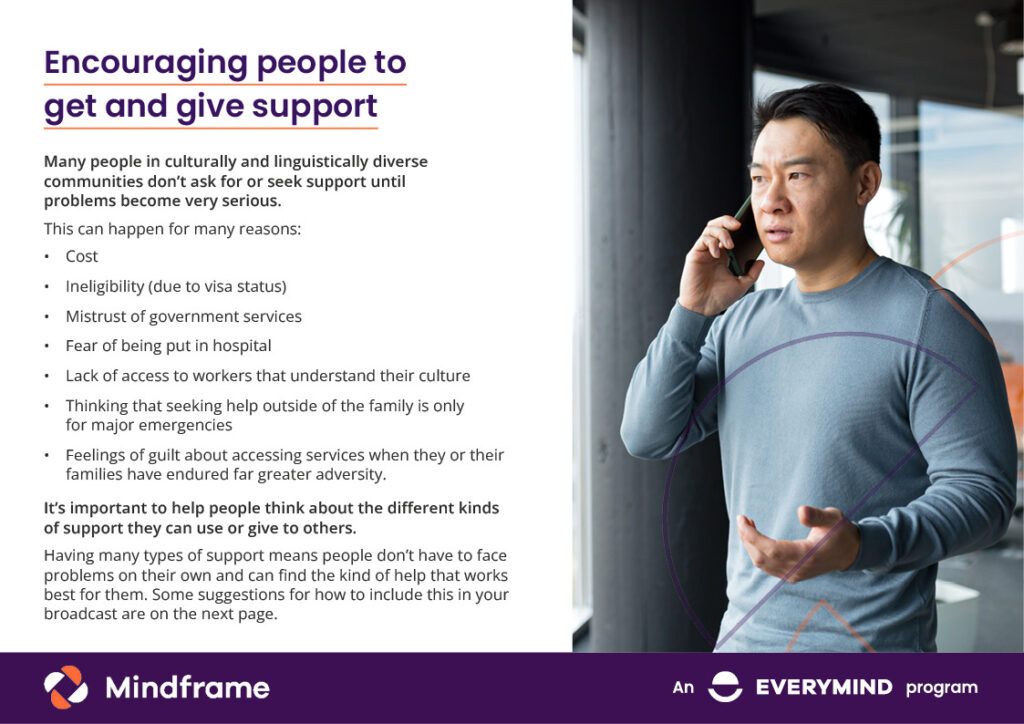
Many people in culturally and linguistically diverse communities don’t ask for or seek support until problems become very serious.
It’s important to help people think about the different kinds of support they can use or give to others.
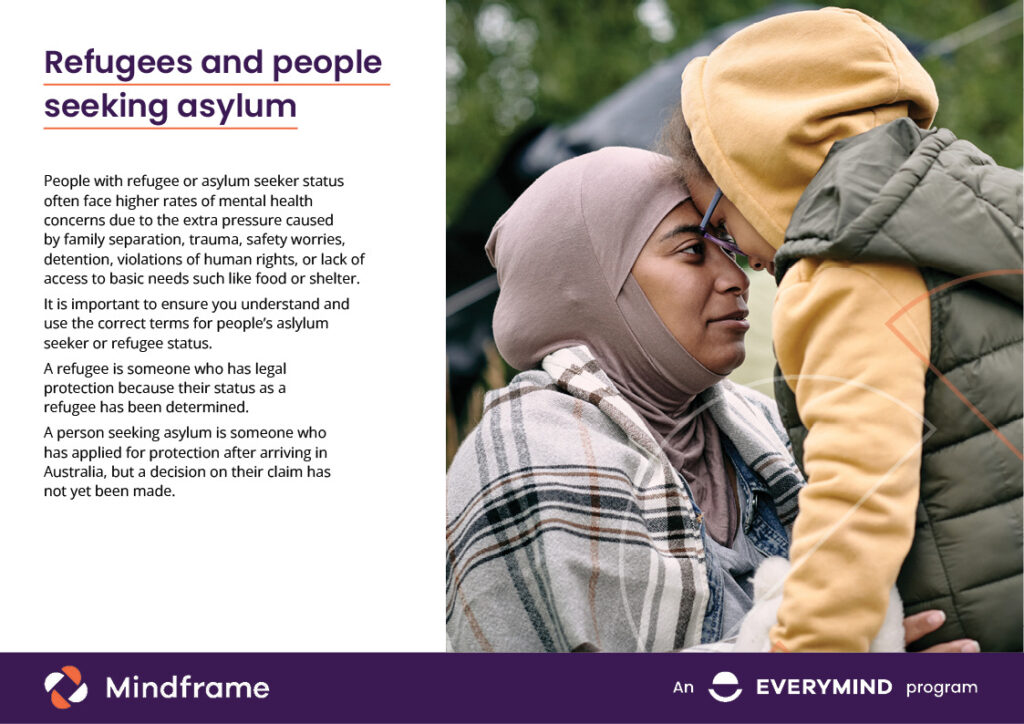
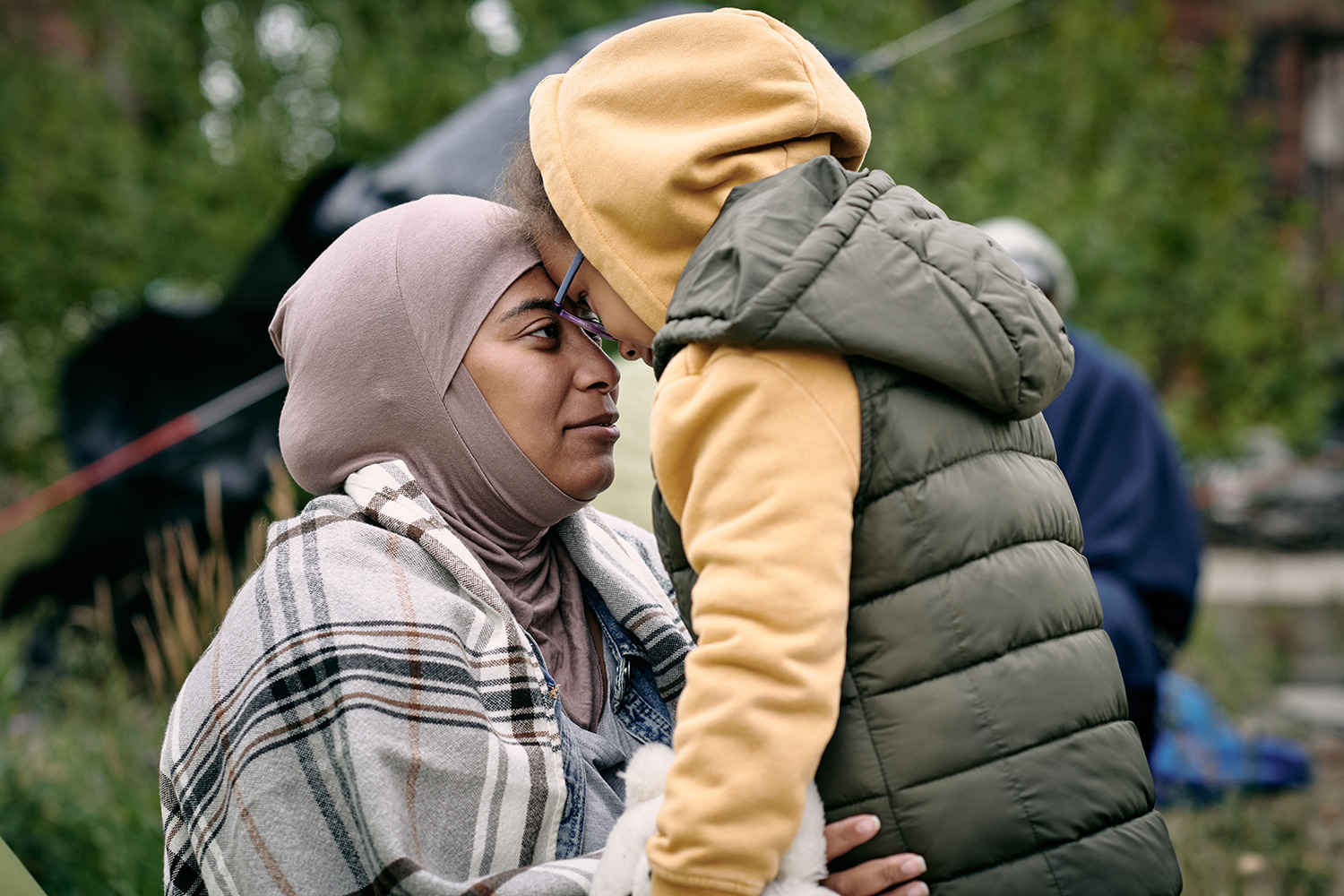
Refugees and asylum seekers often face higher rates of mental health concerns due to the extra pressure caused by family separation, trauma, safety worries, detention, violations of human rights, or lack of access to basic needs such like food or shelter.
Additional resources
When talking about mental health concerns or suicide, you might hear stories that are sad or hard to listen to, so it’s important for community broadcasters to take care of themselves.
This resource contains advice on how to plan and action some useful wellbeing techniques and approaches, along with a template to get you started.
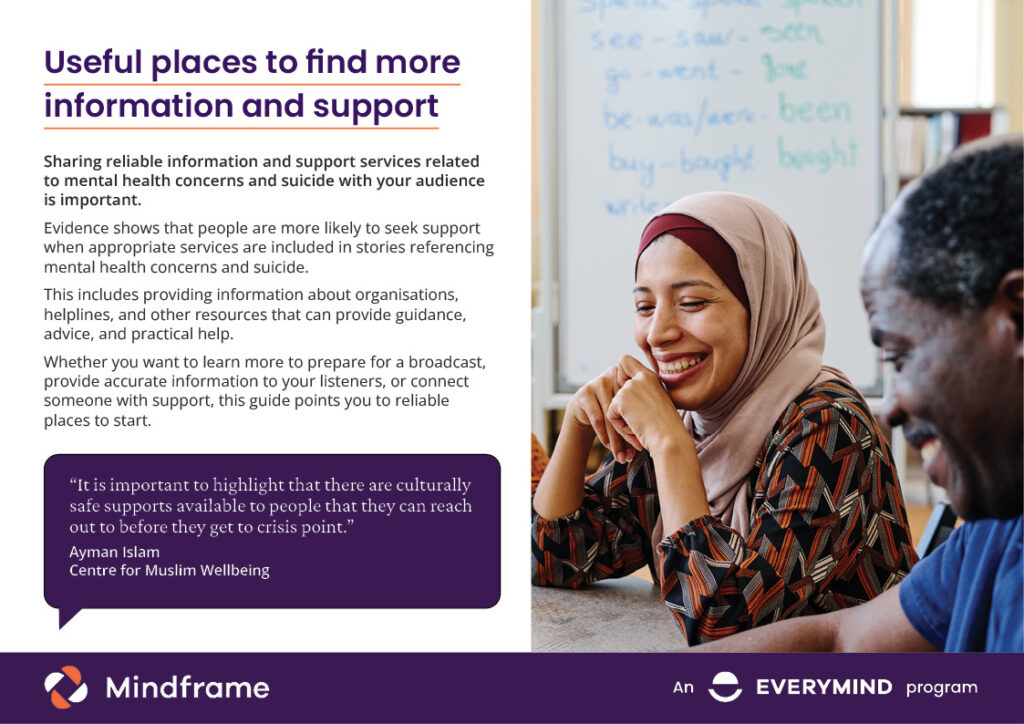
Sharing reliable information and support services related to mental health concerns and suicide with your audience is important.
Evidence shows that people are more likely to seek support when appropriate services are included in stories referencing mental health concerns and suicide.
This checklist is designed to help you prepare, present, and follow up from your broadcast in a way that supports your listeners, reflects your community, and looks after your own wellbeing.
It is intended to be used alongside the information presented in the resources.
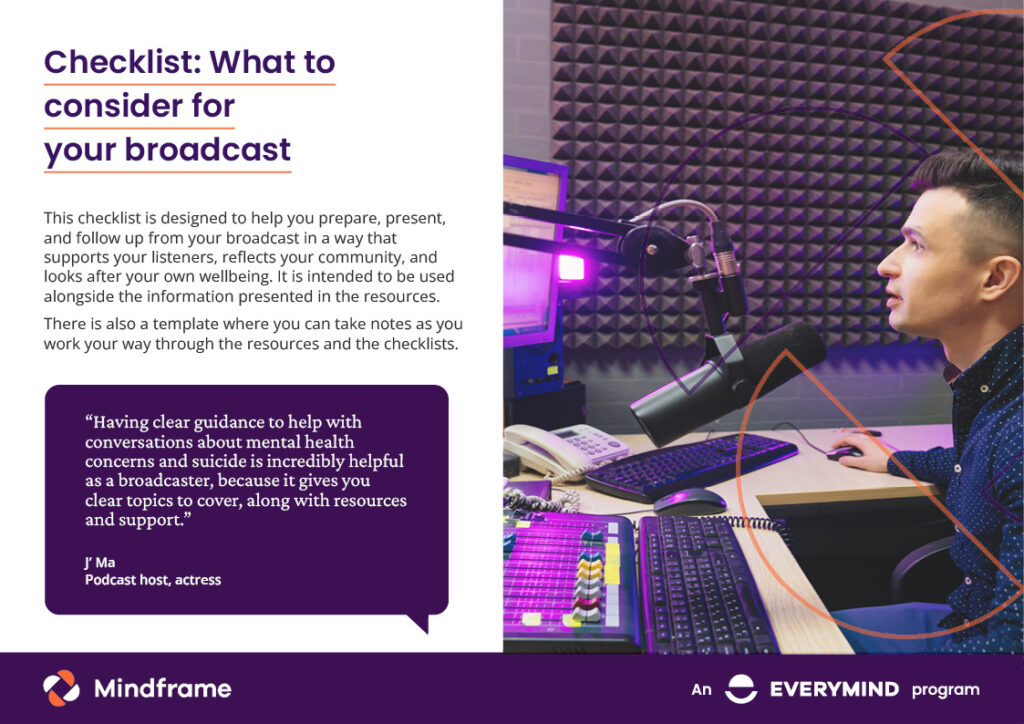
Planning template
This template form has been designed to support community broadcasters in planning to talk about mental health concerns and suicide on air.
It brings together the key elements of the resource collection in a simple, practical format that you can adapt to your own program with spaces for you to add your planning notes.
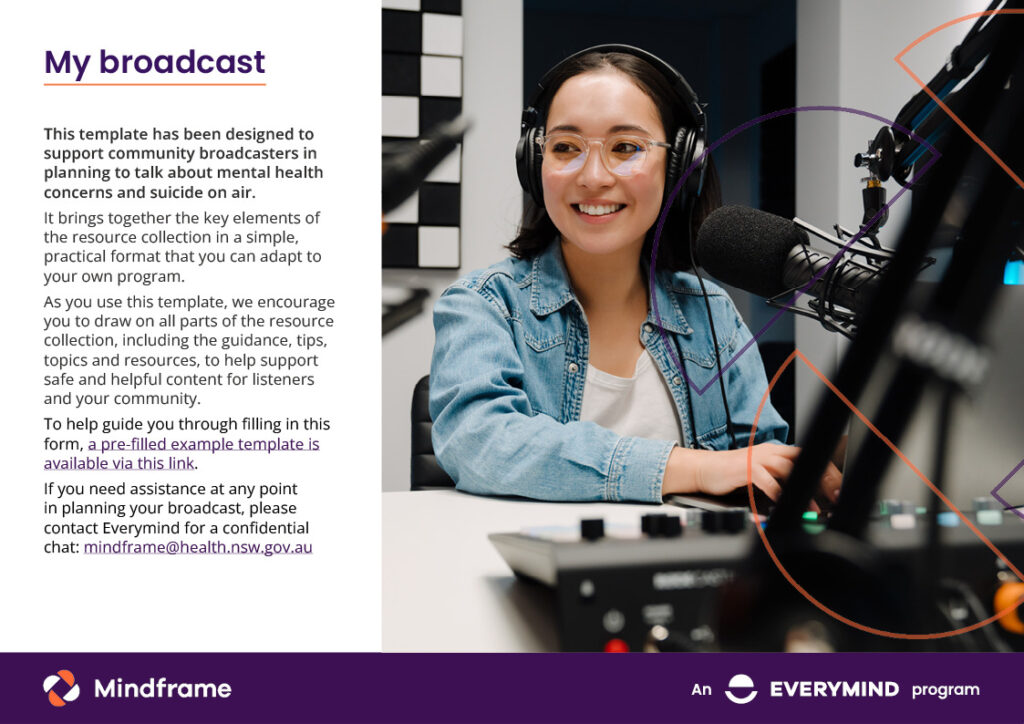
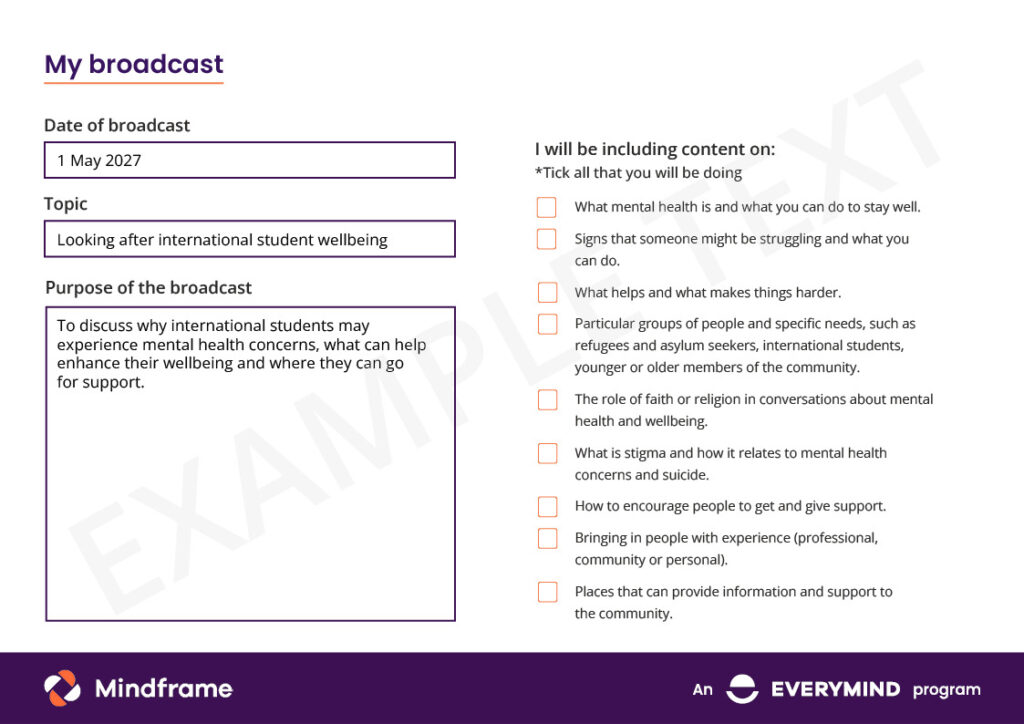
Example template
Use this pre-filled template as a guide for creating your own broadcast on mental health concerns or suicide.
It includes practical examples and suggested wording, making it easier to plan for your own broadcast using the planning template above.
About these resources
This collection of resources has been developed based on the input and needs of community broadcasters. Each resource has been developed based on consultation with a number of individual broadcasters and media organisations.
In addition to the many contributors from the community broadcasting and mental health and suicide prevention sectors who provided input anonymously, Everymind wishes to acknowledge and thank the following individuals and organisations for their valuable assistance in the development of these resources:
Andrew Segelov, Counsellor and community broadcaster on mental health
Ayman Islam, Centre for Muslim Wellbeing
Embrace Multicultural Mental Health
Estela Fuentes, Community broadcaster and Coordinator Mariposa Trails Cross Cultural Education Project and Suicide Prevention Network
Fred Ramanzini, Community broadcaster (BayFM 99.9) and multilingual specialist
Jacky Cheung, AC 878 Australian Chinese FM Radio
J’ Ma, Podcast host/actress
Joy Wairimu