If you, or someone you know is in immediate danger, please call 000, visit your nearest hospital emergency or contact any of the crisis support services.
A lived experience of suicide is having experienced suicidal thoughts, survived a suicide attempt, supported a loved one through suicidal crisis, or been bereaved by suicide.
Sharing your lived and living experience of suicide is incredibly powerful. It can create change, provide hope, empower others, and contribute to your own healing. It can also be challenging, uncomfortable or met with resistance and barriers. These resources are designed to assist safe and impactful public sharing of personal stories about suicide.
Resources and videos on this page
- Our stories matter: A guide for publicly sharing lived and living experience of suicide
- Easy read guide
- What do you wish you had known before you started sharing your story publicly (video)
- Preparing for sharing your story
- How has your story evolved over the time youhave spent sharing it? (video)
- Looking after yourself: Self-care and avoiding burnout
- How important is self-care when sharing your story (video)
- Understanding the media
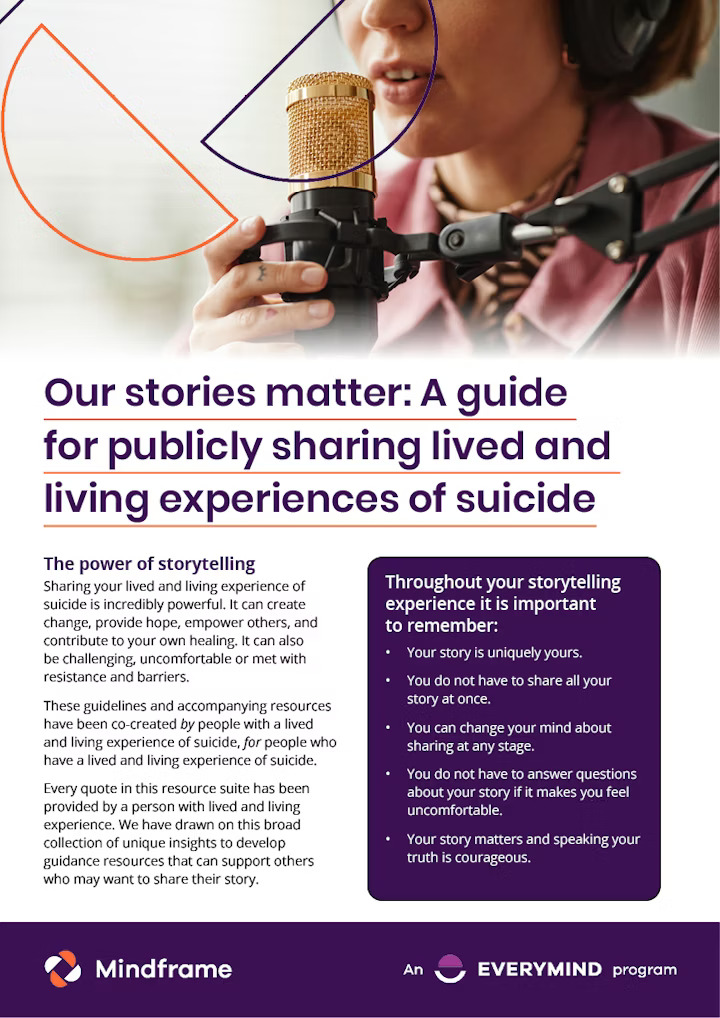
Our stories matter: A guide for publicly sharing lived and living experience of suicide
Every quote in this resource suite has been provided by a person with lived and living experience. We have drawn on this broad collection of unique insights to develop guidance resources that can support others who may want to share their story.
Key topics covered in this resource include:
- Ensuring you understand your purpose for sharing your story
- Having a self-care plan in place
- Considering the language you are using
- Setting boundaries to protect your wellbeing
- Being prepared for people, including strangers, to ask you questions about your story.
Easy read guide
This document had been designed to make these resources as accessible as possible.
It features:
- Simplified language
- Short sentences
- Clear design
- Accessible fonts and colours
- Visual aids
Preparing to share your story
This workbook has been created to be used in conjunction with the Mindframe guidelines document for sharing lived and living experience of suicide. It aims is to provide an interactive space where you can apply the guidelines to your own story and consider some important questions before sharing your story publicly.
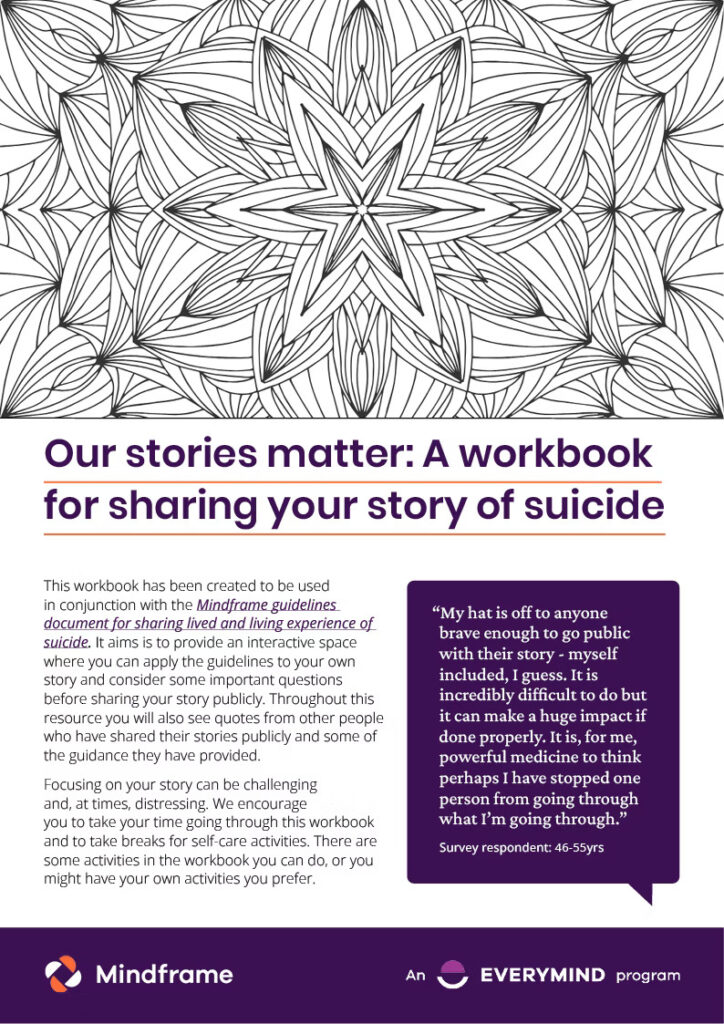
Our stories matter: A workbook for sharing your story of suicide
Throughout this resource you will also see quotes from other people who have shared their stories publicly and some of the guidance they have provided.
Focusing on your story can be challenging and, at times, distressing. We encourage you to take your time going through this workbook and to take breaks for self-care activities. There are some activities in the workbook you can do, or you might have your own activities you prefer.
Digital: Click here to download the digital version of this resource.
Print: Click here to download the print version of this resource.
Looking after yourself: Self-care and avoiding burnout
This section features two resources:
- Our stories matter: Self-care planning for sharing your lived and living experience publicly
- Our stories matter: Preventing burnout when sharing lived and living experiences publicly
These guides are focused on steps and strategies you may wish to consider in order to best safeguard your own wellbeing throughout the sharing process. The feature perspectives and practical advice from people who have shared stories of their own lived and living experience publicly about what to expect and what has worked for them.
Our stories matter: Self-care planning for sharing your lived and living experience publicly
This resource includes some ideas about the different areas of self-care you may want to engage with, examples of self-care activities you might use ( you will also have some of your own), and a template to help you plan how to maintain your wellbeing during the storytelling experience.
Our stories matter: Preventing burnout when sharing lived and living experiences publicly
Burnout can occur when you feel overwhelmed, emotionally drained, engaged in lived experience work that feels tokenistic or like nothing has changed despite your efforts to contribute to meaningful progress.
Everyone’s experience is different. What works for one person to reduce burnout may be different to another.
Understanding the media
Sharing your lived and living experience of suicide is incredibly powerful. It can also be challenging, uncomfortable and could result in your story being used and published in places or contexts that you may not have expected or been ready for.
Taking the time to consider the way media outlets are owned and operated, as well as understanding the steps that media professionals may take in the process of researching and platforming your story is important, regardless of what type of media format you may be interested in engaging.
Our stories matter: Understanding the media and communications landscape
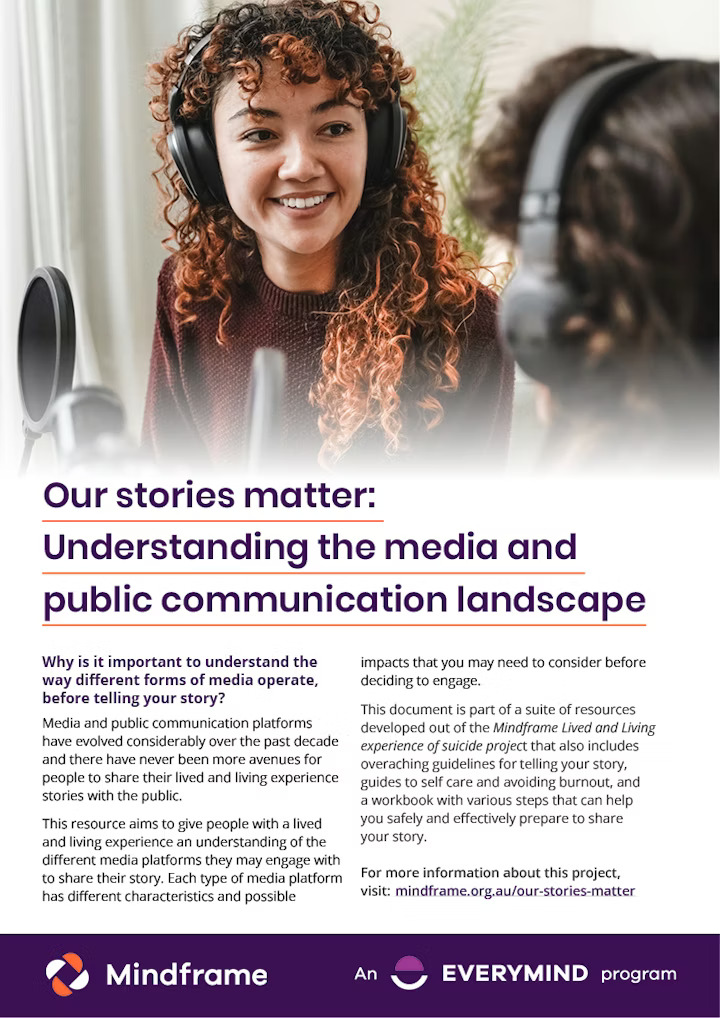
Media and public communication platforms have evolved considerably over the past decade and there have never been more avenues for people to share their lived and living experience stories with the public.
This resource aims to give people with a lived and living experience an understanding of the different media platforms they may engage with to share their story. Each type of media platform has different characteristics and possible impacts that you may need to consider before deciding to engage.